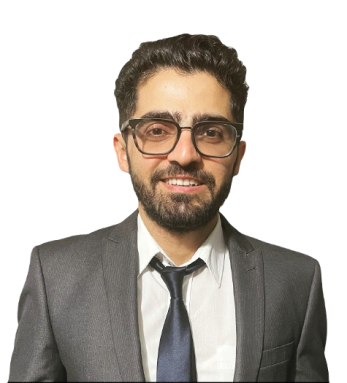
Namig Abbasov
AI & Technology Initiatives Librarian, Stanford Law School
I study how institutions adopt and govern artificial intelligence, and I build AI tools for legal and academic research. At Stanford Law School, I develop AI discovery tools and retrieval-based research workflows, turn digital collections into research platforms, and help establish AI governance and auditing frameworks for legal research.
I hold a PhD in political science from Arizona State University and an MS in data science from the University of Arizona. My research uses survey experiments, machine learning, and natural language processing to study AI in higher education, how AI-generated explanations shape what people believe, and how computational methods can forecast conflict and policy outcomes.
Research
My work focuses on four areas: AI in higher education; AI for academic and legal research; the governance of AI and emerging technologies; and machine learning for conflict and policy forecasting.
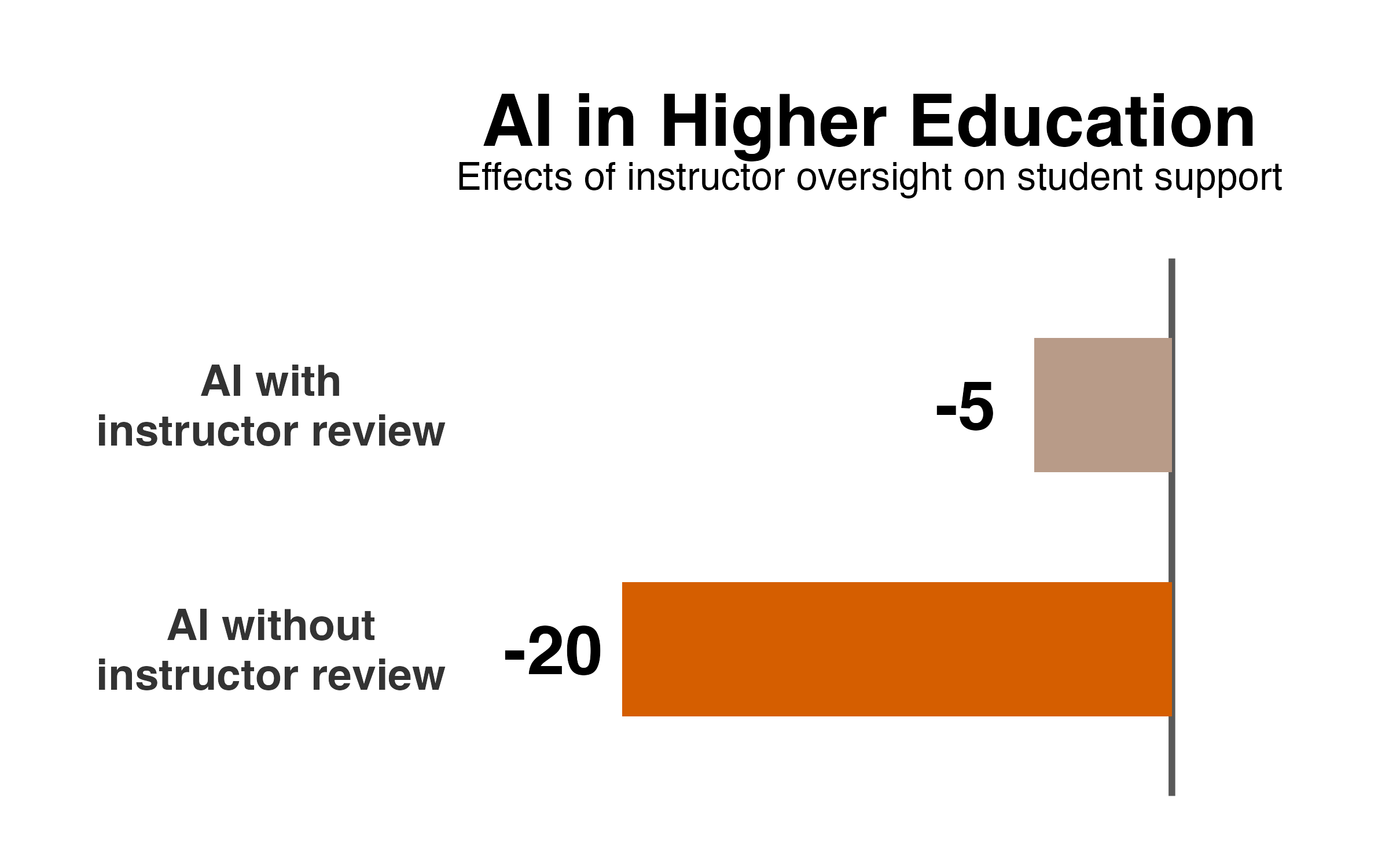
AI in Higher Education: Student Perceptions of Course-Level AI Policies
A conjoint experiment examining how students evaluate AI integration across instructional materials, assessments, and personalized support.
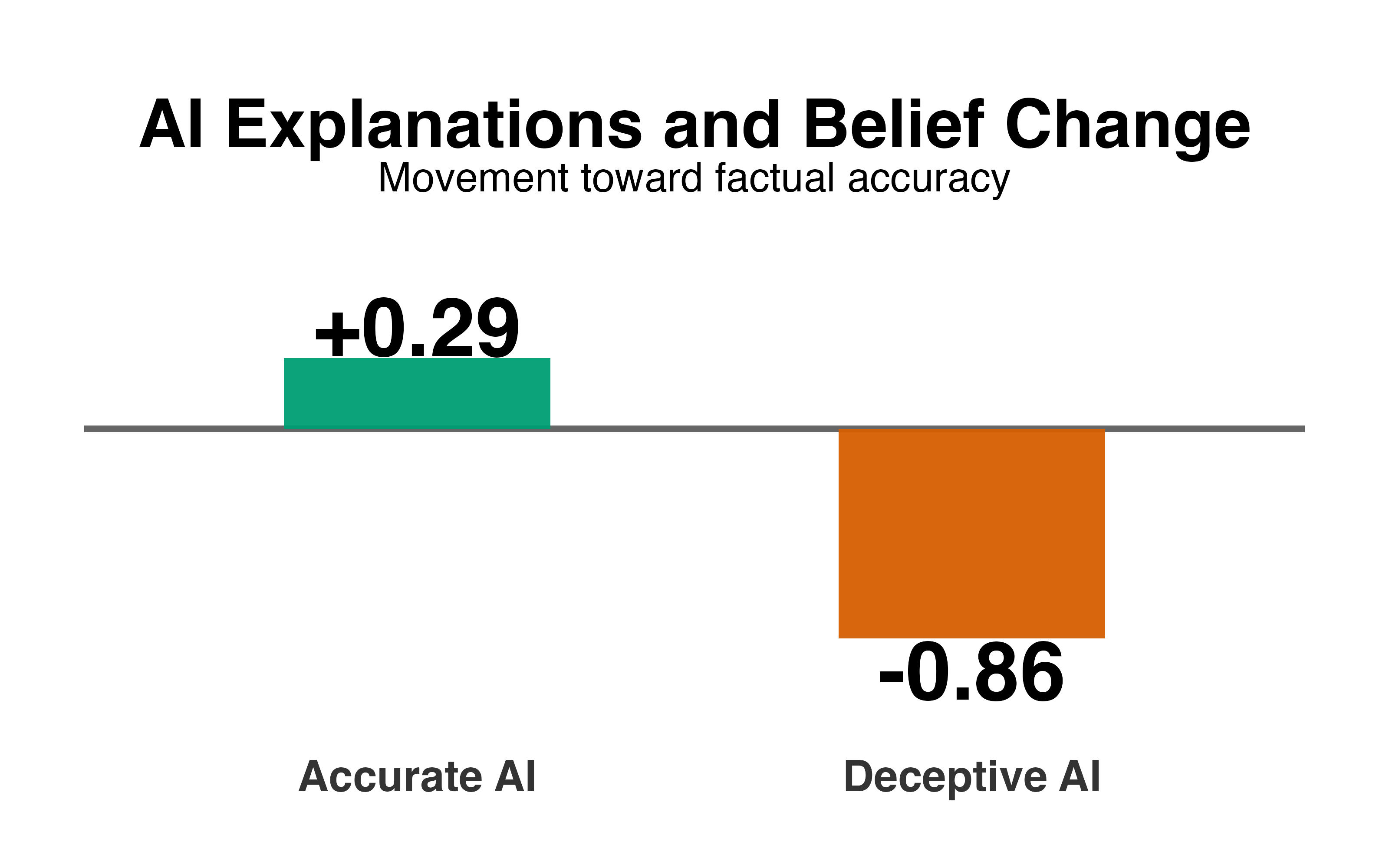
AI Explanations, Misinformation, and Belief Updating
A survey experiment examining whether accurate and deceptive AI-generated explanations move people toward or away from factual accuracy.
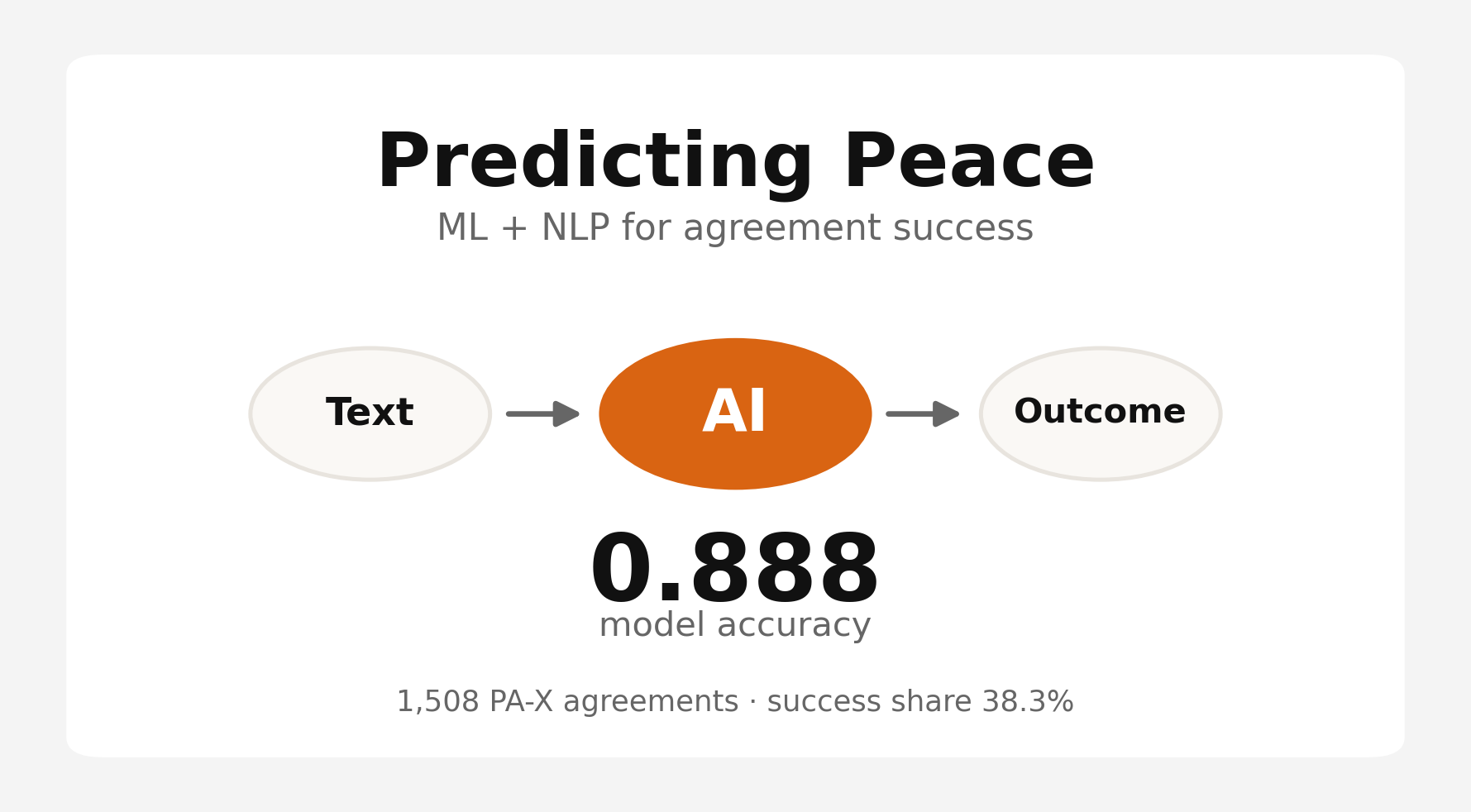
Predicting Peace: Machine Learning and NLP for Peace Agreement Success
A computational framework combining machine learning, transformer-based NLP, and SHAP explainability to forecast whether peace agreements end armed conflict.
Selected Publications
- Yilmaz, I., Akbarzadeh, S., Abbasov, N., & Bashirov, G. (2025). The double-edged sword: Political engagement on social media and its impact on democracy support in authoritarian regimes. Political Research Quarterly, 78(2), 419–436.
- Pranto, P. B., Islam, M., Saha, R. K., Mercado Rivera, A., & Abbasov, N. (2025). From hubs to deserts: Urban cultural accessibility patterns with explainable AI. In Proceedings of the 3rd ACM SIGSPATIAL International Workshop on Advances in Urban-AI (UrbanAI ’25). ACM.
- Abbasov, N., & Thies, C. G. (2023). Between the West and Russia: Explaining individual foreign policy preferences in small states. Foreign Policy Analysis, 19(2).
- Abbasov, N. (2023). In defence of the nation: Why do churches receive public trust as high as their secular counterparts? Nations and Nationalism, 29(4), 1372–1400.
- Abbasov, N. (2021). Antigovernment protests and commitment to democratic principles. Problems of Post-Communism, 69(1).
- Souleimanov, E., Abbasov, N., & Siroky, D. (2019). Frankenstein in Grozny: Vertical and horizontal cracks in the foundation of Kadyrov’s rule. Asia Europe Journal, 17(1), 87–103.
- Abbasov, N., & Siroky, D. (2018). Joining the club: Explaining alliance preferences in the South Caucasus. Caucasus Survey, 6(3), 252–267. Center for Open Science Preregistration Prize.
Full list on Google Scholar and in my CV.
Projects
Tools I have built to put research into practice for researchers, librarians, and legal educators.
- AI Governance Observatory for Legal Education
An interactive platform mapping how law schools govern generative AI across teaching, research, and professional training.
- AI for Academic Libraries
A learning hub of AI tools, practical guides, and curated resources for researchers and librarians in higher education.
- EurekaRaven
A daily briefing that curates the most significant AI research, product releases, and industry news.
Experience & Education
Positions
- 2026–presentAI & Technology Initiatives LibrarianStanford Law School
- 2023–2026Digital Humanities AnalystArizona State University
- 2024–2025Instructional Professional (part-time)Arizona State University. Taught AI in Space Exploration, Statistics, and PhD Math Camp.
Education
- 2025MS, Data ScienceUniversity of Arizona
- 2022PhD, Political ScienceArizona State University
- 2012BA, European Studies and Economic SciencesQafqaz University
Contact
Email is the best way to reach me: namig.abbasov@stanford.edu. I welcome inquiries about research collaborations, talks, and AI initiatives in libraries and legal education. I also write on Substack.